
INTRODUCTION
Lost in NYC , From Watergate to SUMO.

Near Death on Lexington at 42nd St.
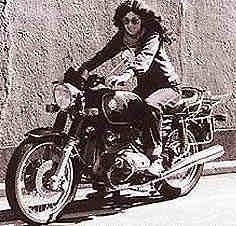
On my 1000 cc double discbrake BMW in front of Tatsunami beya in Tokyo.
This is a Collection of stories from my years of being embedded in the inner sanctum of the small, practically hidden Japanese secret world, closed even to everyday Japanese society. The Traditional world of Sumo. Some of my on-location artwork accompanies the stories.
As a reportage artist, I spent 42 years documenting their pageantry, beauty, and strength in drawings and paintings.
That, however, was not at all the original plan….
TOKYO, 1973
SUDDENLY, without any preparation, I found myself in a completely alien culture. Not understanding a word of the Japanese language, I was dragged into many long meetings with groups of chain-smoking businessmen, sitting around a huge round table in a conference room with all the doors and windows closed. They were all dressed in the same black suit and white shirt. The meeting was to introduce the New York Fashion Illustrator to the group. No one, however, talked to me, and no one spoke English. I was just there on display.
To try to understand at least something of their conversation, I used my reportage artist’s observational skills to study their body language and interplay. But periodically, I had to excuse myself and leave the room and the heavy cloud of smoke in the air for a few minutes, so I could breathe.
I gradually learned the language and continued to study the people around me to understand more deeply how they communicated. The Japanese, much more than Americans, communicate with subtle expressions and body language.
Of course, they could see I was very different, being foreign and female, which is often detrimental. What I learned from observing them helped me become somebody who made them more comfortable with my presence. I believe that helped them come to some understanding that I was non-threatening. However, there were always some who were not pleased.
Sitting at sumo practice or the tournament every day, my drawing skills and speed improved, and my understanding of Japanese culture and society became a bit clearer. Sumo, however, I had to remember, and you should know, has little in common with modern day Japanese society – they live more as if they were in the Meiji era, 100 or more years ago.
NYC 1971
I had suddenly been thrown off my motorcycle in the pouring rain, slammed to the pavement, and found myself sliding across the rain-soaked Lexington Avenue on my side, in the evening rush hour. To my horror, I watched my fallen 600-pound BMW motorcycle spinning in circles away from me in the opposite direction!
All I could think about was that I hoped the bike wasn’t damaged! The second thought was, how did I get here? I had no awareness of myself. I was sliding toward the crosswalk at 42nd St. with an inertia impossible to fight.
As always, I rode my motorcycle downtown for Jack Potter’s Monday night drawing class at the School of Visual Arts. Being an experienced rider of large motorcycles, the rain didn’t bother me. I know the rules of riding in the rain—what to do and what to avoid. It had become second nature by now. But on this night, just halfway downtown, when a taxi suddenly stopped short right in front of me, I had no choice but to slam on my brakes or I’d end up going through his rear window! The bike went down in an instant, and I was thrown to the pavement.
By some miracle, the inertia-fueled slide stopped right at the crosswalk at 42nd St., where 10 feet past that point, six lanes of rush-hour traffic were speeding east and west in the dark. Had I slid through the crosswalk into 42nd St., I would’ve become roadkill.
…
I loved being in NYC after graduating from College in Philadelphia, but felt lost. I could not find a purpose. I had a good job as a fashion illustrator for a major department store, something I had wanted to do since I was 10 years old. But I needed more. Something important, something I could get my teeth into, like eating a thick, juicy steak instead of a mouthful of cream of wheat. Something was missing.
I had started to study with the great Jack Potter at the School of Visual Arts downtown to keep up my drawing skills, which could get me important positions.
One day John Fogarty of Credence Clearwater Revival, my favorite band, called me, said he just got to NYC, and that our mutual friend Peter in LA suggested we get together. He invited me to go to a party with him the next night, Monday night, at Bob Dylan’s house in the village.
While in college, I made money for my singing lessons and art supplies by playing guitar and singing folk songs at a local bar near the college. Always trying to channel Joan Baez.
Meeting Bob Dylan now would be great, but I told John I couldn’t miss my Monday night drawing class. I asked if we could get together the next day. He said that he and his band were leaving then for a three-month tour of Europe the next day, so I missed the opportunity to meet him.
Next, WATERGATE